
Old lures tell good stories.
Learn how to read the body, hardware, paint, eyes, box, and condition clues that separate an interesting tackle-box find from a serious collectible.
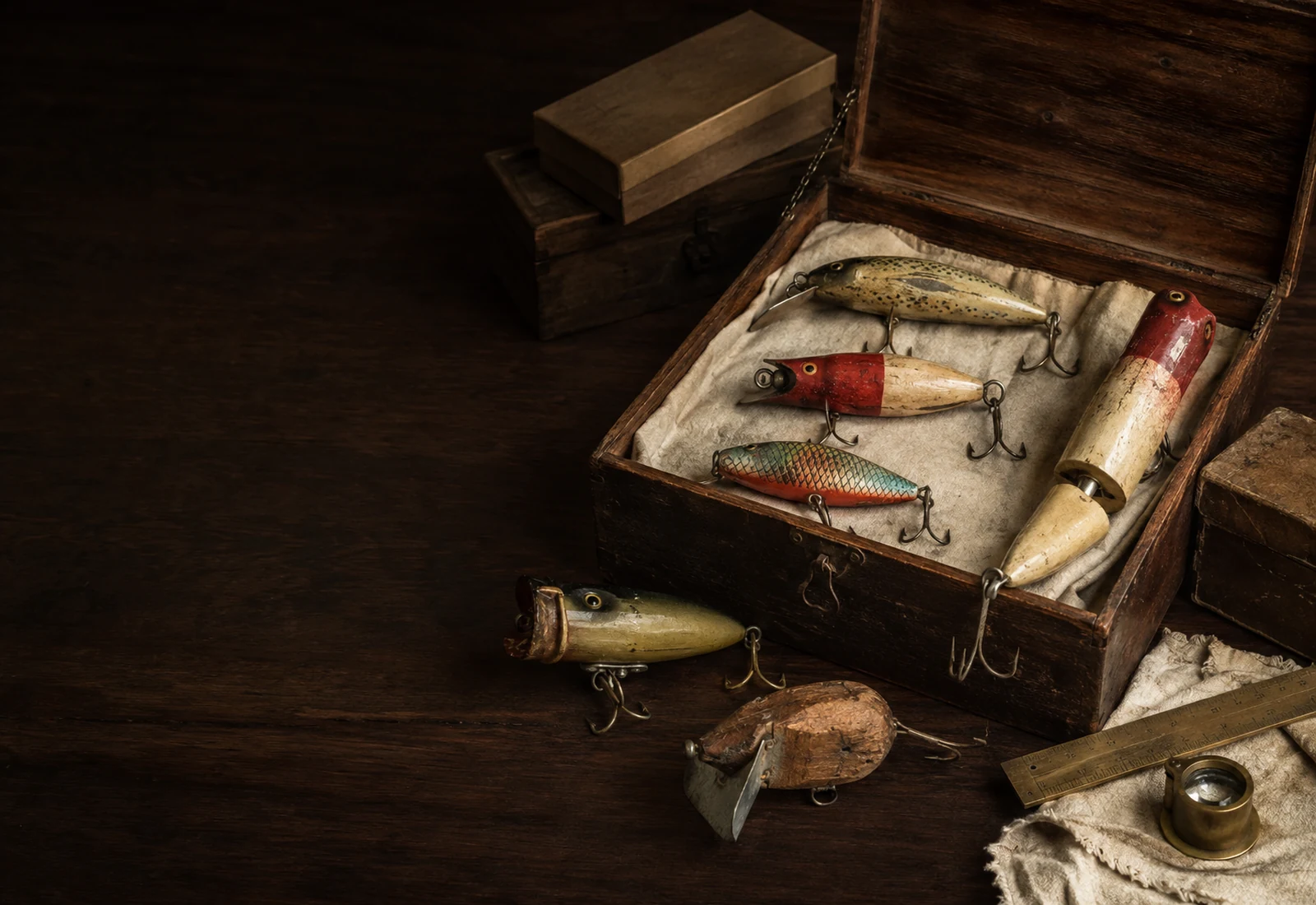
What did you find?
Begin with the broadest clue you can verify. A name stamped on a belly is stronger than a color nickname. A matching box is useful only when the model, size, and finish agree.
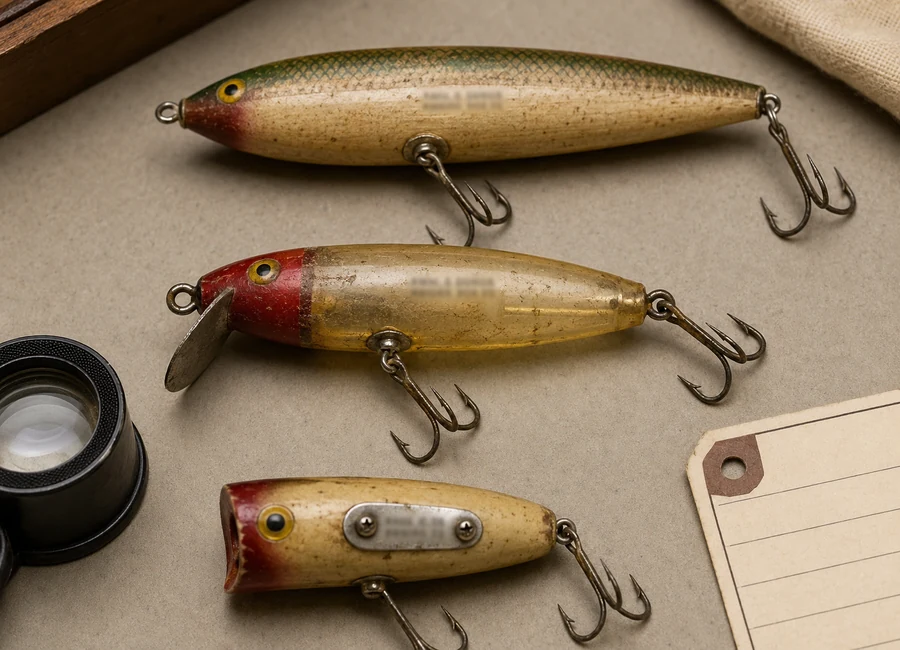
A named maker
Heddon, Creek Chub, Arbogast, South Bend, Pflueger, and more.
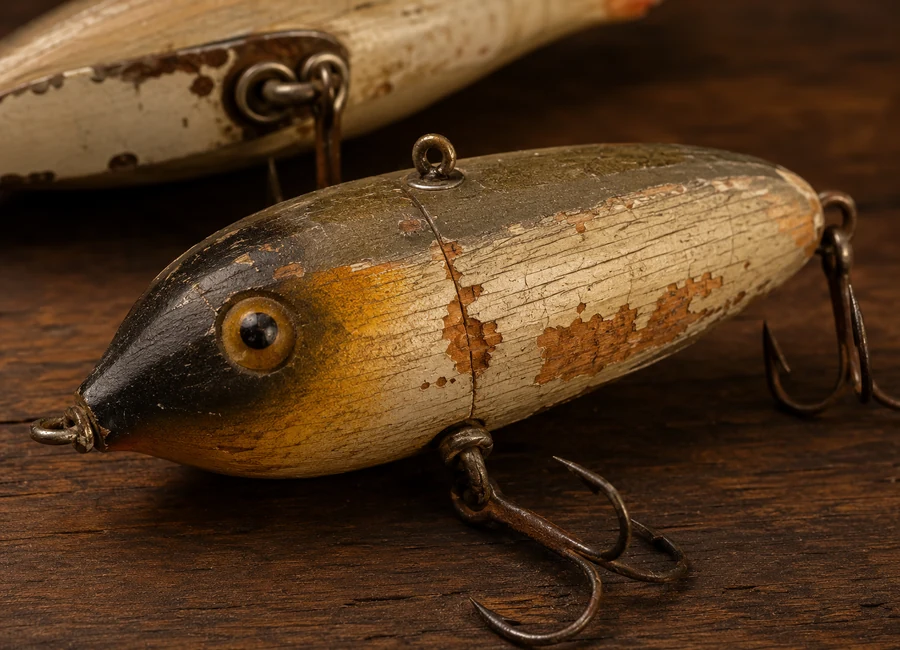
A wooden lure
Read seams, grain, screw eyes, hook hangers, and finish wear.
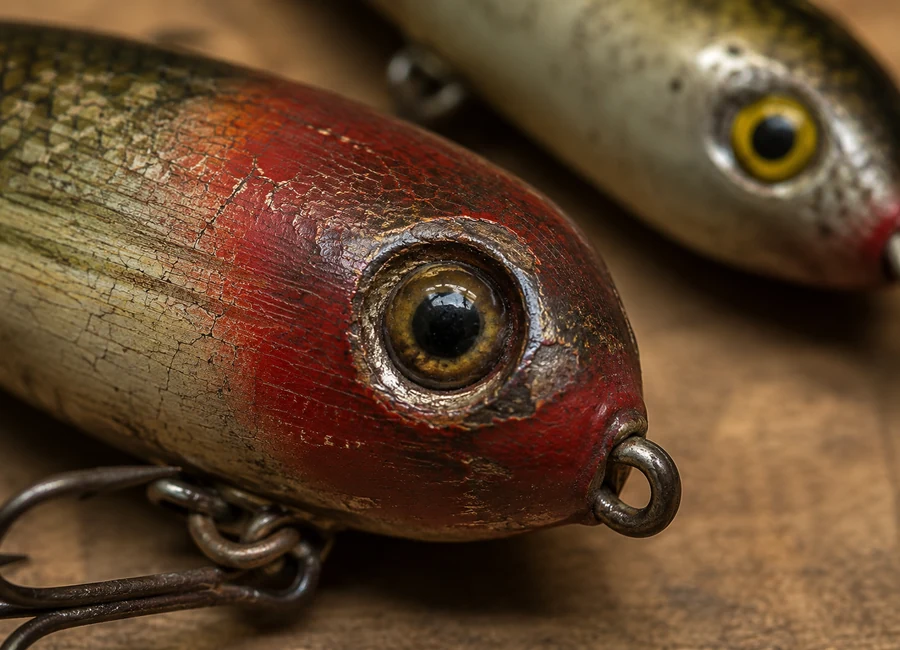
Glass or tack eyes
Eye construction can narrow the era, but rarely proves it alone.
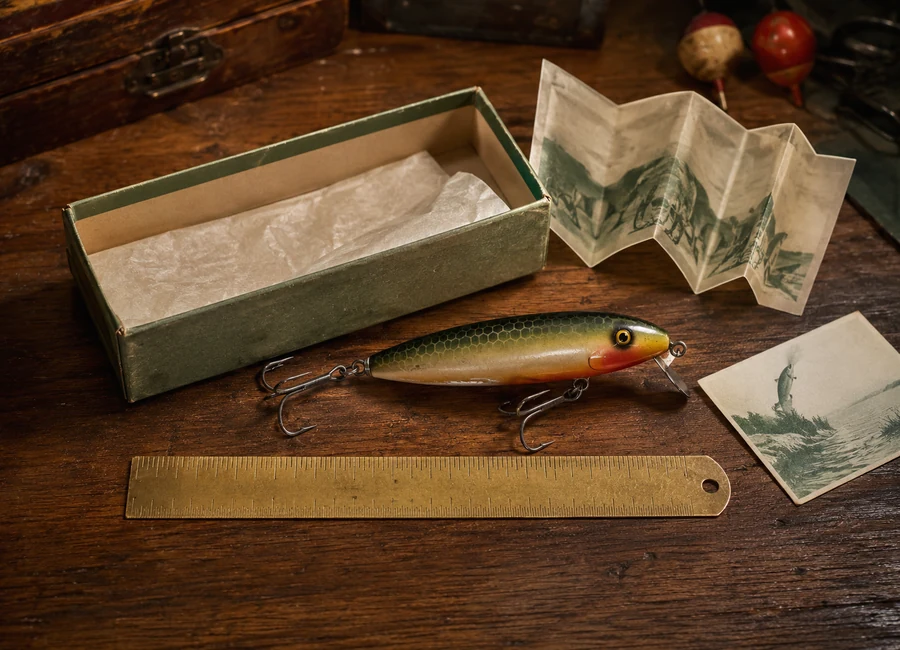
A lure with its box
Match model number, color code, box era, insert, and dimensions.
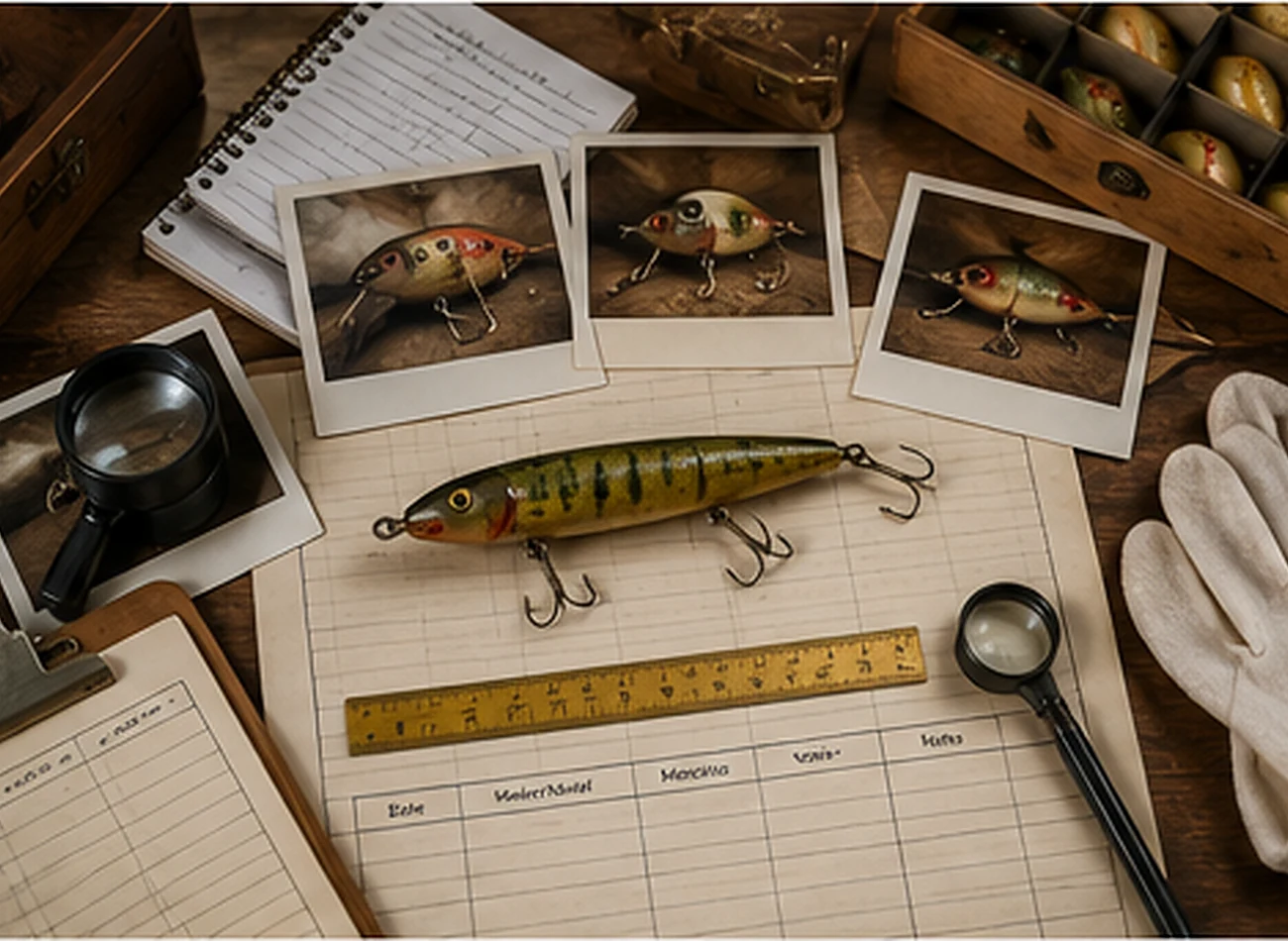
Work from physical evidence, not wishful thinking.
Browse by maker
These names account for a large share of active vintage-lure searches, but the site also leaves room for regional makers, folk art, store brands, and unmarked baits.
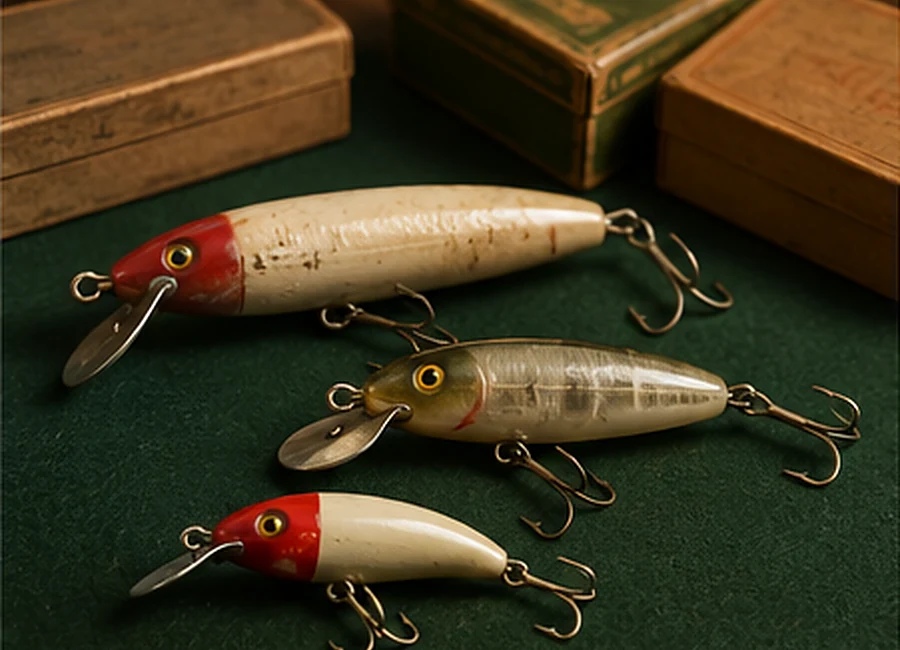
Heddon
Dowagiac roots, wood and early plastic, long-running model families.
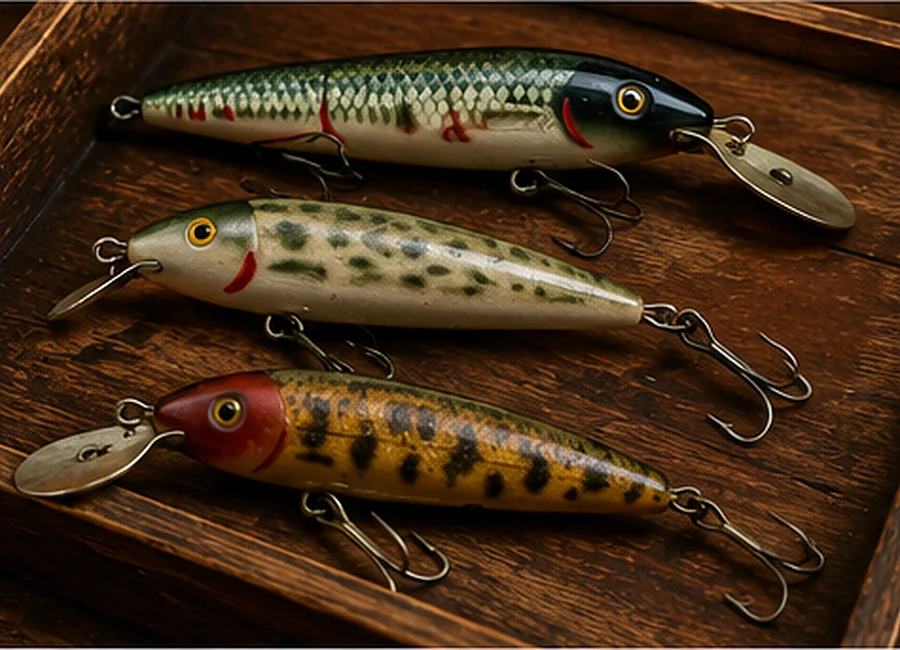
Creek Chub
Painted scales, metal lips, Pikie, Wiggler, Darter, and Injured Minnow.
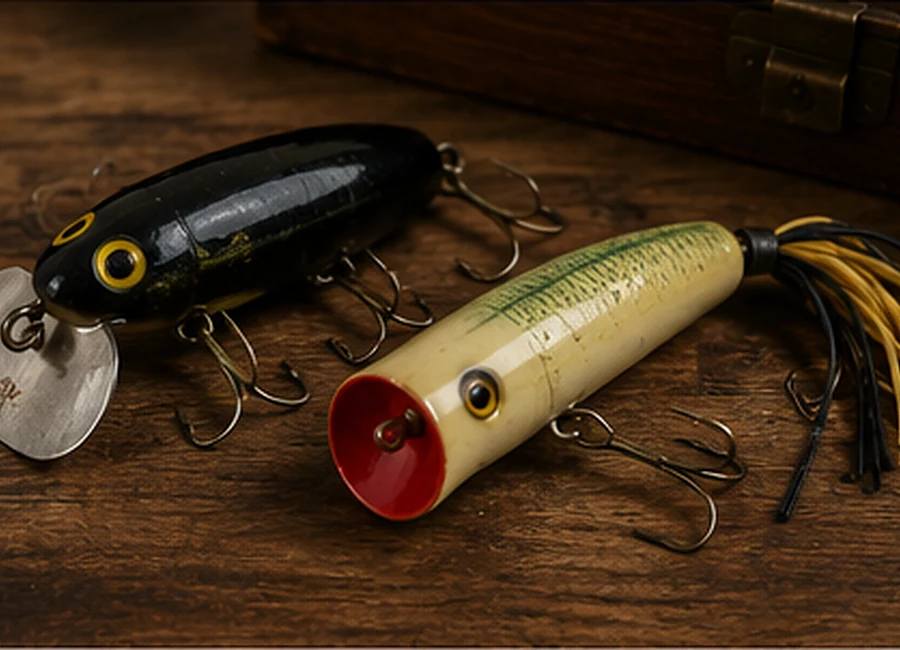
Fred Arbogast
Topwater innovation including Jitterbug and Hula Popper families.
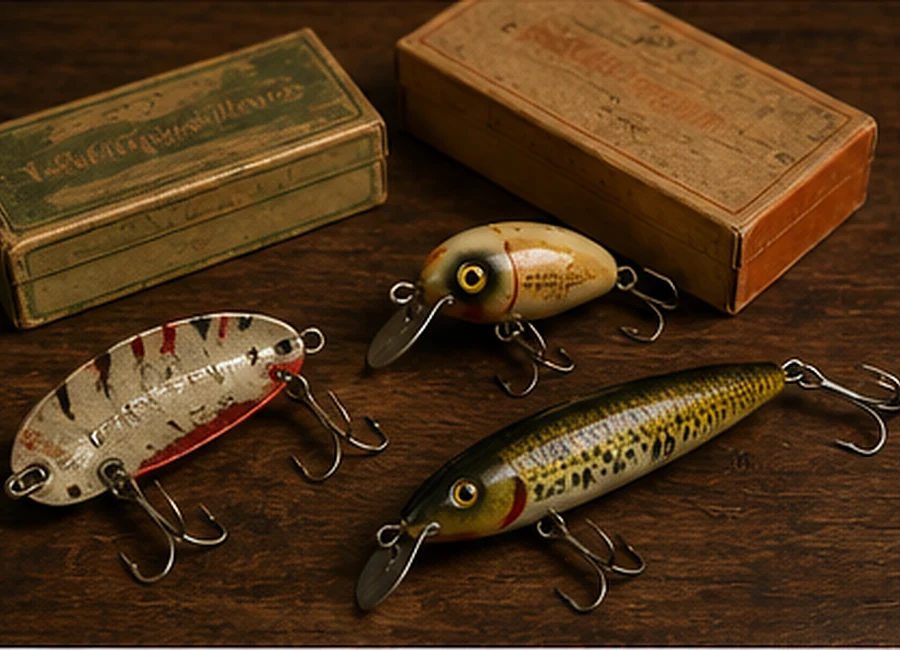
South Bend
Oreno families, diverse bodies, finishes, and box styles.
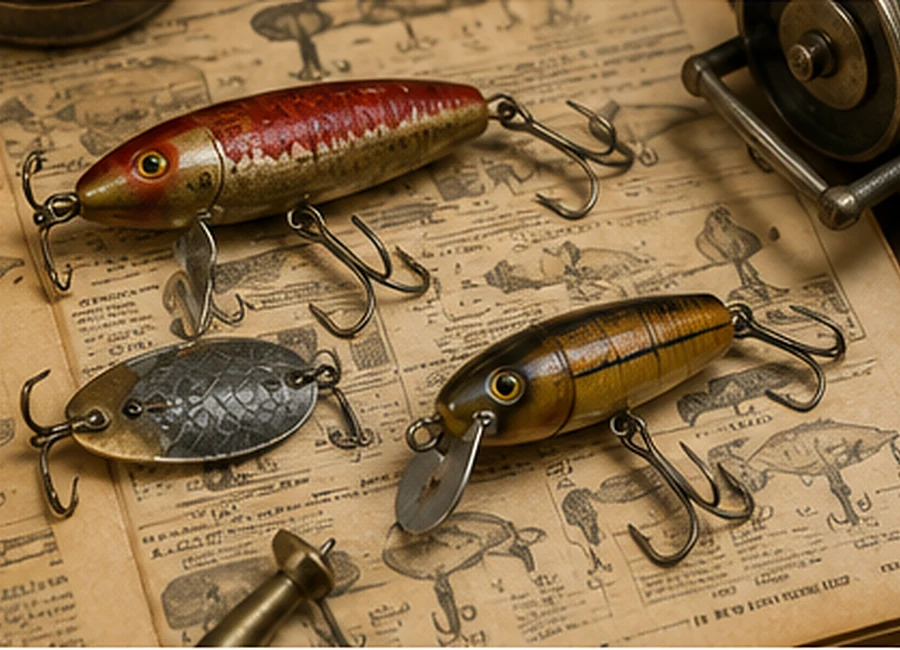
Pflueger
Early tackle history, metal and wood baits, distinctive boxes and hardware.
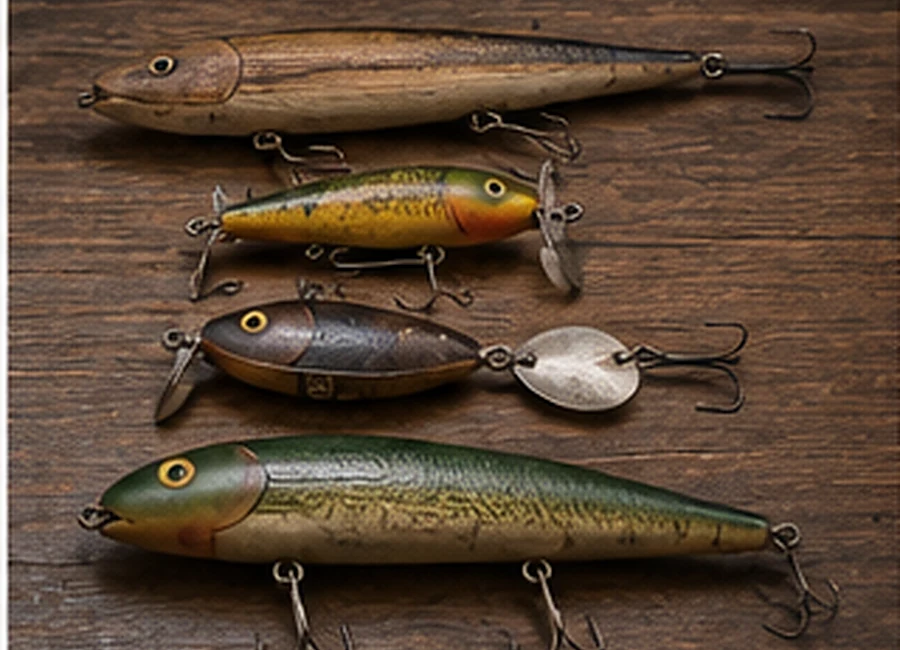
Unmarked & regional
Use construction details and resist assigning a maker too quickly.
Find comparable lures without drowning in modern tackle.
Use the search below to add a maker, model, color, eye style, material, or box term. The result opens eBay’s vintage-lure category with your search phrase.
Affiliate disclosure: qualifying purchases may earn this site a commission at no extra cost to you.
Condition, originality, rarity, and confidence all matter.
A famous name does not automatically make a lure valuable. A common model in rough condition may be modestly priced, while an unusual finish, correct box, scarce size, or early hardware variation can change collector interest.
Use sold comparables when available, not only ambitious asking prices. Compare like with like: same model, size, finish, construction, box status, and restoration status.
Read the value guide
Practical collector reading
How to photograph an old lure
The exact views that make identification easier and prevent missed hardware clues.
Read guide →Condition without overcleaning
Why “making it look new” can erase the evidence collectors need.
Read guide →Buying tackle-box lots
A disciplined way to scan mixed lots for makers, materials, boxes, and problems.
Read guide →